


The Haakaa LatchFlow System

This blog is written by Lauren Brenton from One Mama Midwife
Sometimes a baby may need some extra supplementation during their breastfeeding journey. The most common time for extra supplementation is in the first few days after birth, but it can occur at any time. There are a few reasons why this may happen, but before we go into that, I want you to know that your baby needing supplementing does not mean that you have failed.
Needing to supplement in the first days or weeks is usually temporary, and it absolutely does not have to mean the end of breastfeeding. In fact, the way you top up can make a big difference to protecting your supply and keeping your baby at the breast.
Why some babies need extra milk early on
In my years as a midwife supporting families after birth, the reasons babies need a top-up are usually things nobody did wrong. A few of the most common:
- More weight loss than expected in the first few days
- Baby not sucking effectively at the breast
- Jaundice may make baby a little more sleepy and more milk can help clear it
- Low blood sugar in the early hours, which is more likely if mum had gestational diabetes or if baby is on the smaller or larger side
- Early or small babies who tire quickly at the breast
- A delay in milk coming in, which can happen if mum and baby are separated after birth, after a significant blood loss or because of some health conditions
- Challenges with latching from things like tongue-tie, flat or inverted nipples or simply a baby who is still learning
And often, at the same time, mum’s nipples are sore or damaged from those early attempts. That combination is exhausting, physically and emotionally.
Why how you top up matters
Breastfeeding works on supply and demand. When your baby sucks at the breast, it tells your body to make more milk. When a feed is replaced with a bottle, your breasts miss out on that message if pumping isn’t started and over time your supply can drop.
That’s why the Australian Breastfeeding Association recommends giving extra milk through a supply line at the breast, rather than by bottle, where you can. Your baby gets the extra milk they need, while still sucking at your breast and stimulating your let-down and your supply. The top-up can be your own expressed breastmilk, donor milk or formula, depending on your situation and your feeding plan.
The ideal top-up is your own expressed milk. Even small amounts of colostrum or breastmilk count, so if you can, keep expressing alongside your feeds.
So what is the LatchFlow System?
Until now, if your feeding plan needed both a nipple shield and a supply line, you were often juggling the two separately. Fine tubing taped to your breast, a shield on top, a syringe in one hand and a baby in the other. It’s not often a sustainable option.
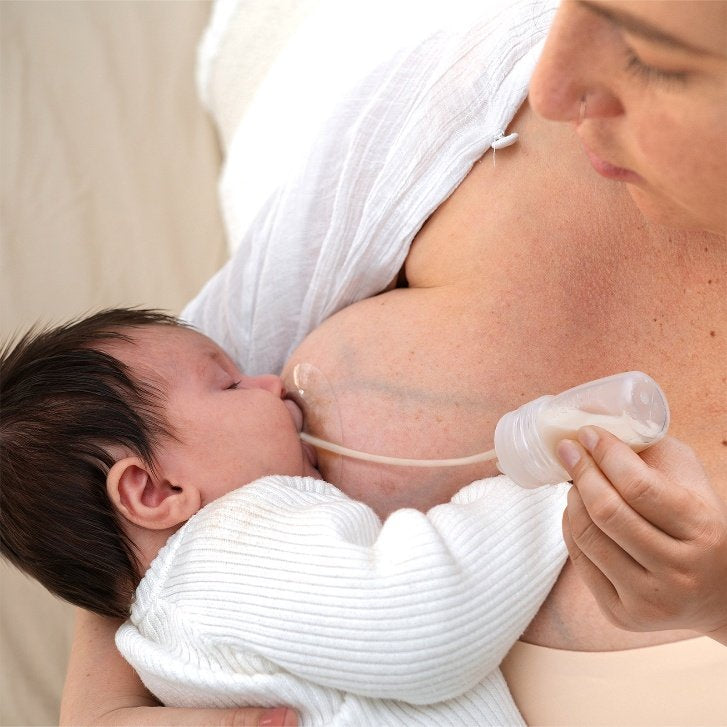
Haakaa’s LatchFlow System brings those two things together. It’s an ultra-thin, medical-grade silicone nipple shield with a built-in channel for supplemental milk.
Here’s how it works:
- The extra milk travels through the built-in channel and is delivered at the tip of the shield, from whichever milk source you connect
- Your own breastmilk still flows through separate openings in the shield as your baby feeds
So your baby gets the extra milk they need, your breasts keep getting the stimulation that builds your supply and you get to keep your baby close at the breast.
Which LatchFlow option suits me?
The honest answer is that it depends on your stage and how much extra milk your baby needs. The shield connects to three different milk sources, and each one suits a slightly different situation.
Option 1: LatchFlow System Nipple Shield Kit
Best for when you need to know exactly how much your baby is getting.
Oral syringes have small, precise measurements, so you can see exactly how much supplement your baby takes at each feed. That’s really helpful when your midwife or paediatrician has given you a specific top-up volume, or when you’re tracking intake closely in the first few days. It’s also easy to use one-handed.
How to use:
- Fill an oral syringe with your supplemental milk and connect it directly to the shield. As your baby feeds, gently press down on the syringe to control the flow.
The syringe isn’t included, so this option suits you if you already have oral syringes at home, from a local chemist or from hospital. Use only an oral feeding syringe or feeding component that fits the 3.8 mm connection securely, and do not force an incompatible component. If you choose this one, you’d buy the Nipple Shield Kit.

Option 2: LatchFlow System – Dispenser Kit with Nipple Shield + 20ml Dispenser
Best for the small volumes of the early days, or smaller babies.
The 20 mL silicone dispenser is made for those tiny early feeds. You control the flow with a gentle squeeze, and there’s no flow controller or separate syringe needed. It’s reusable and easy to clean and sterilise.
How to use:
- Fill the dispenser, connect it directly to the shield, then squeeze gently to start the flow and adjust it as your baby feeds.
This comes in the Dispenser Kit.
Option 3: LatchFlow System – All in One Kit with Nipple Shield + 20ml Dispenser + 120ml Pouch
Best for bigger feeds as your baby grows, and hands-free feeding.
As your baby’s needs increase, the 120 mL soft pouch gives you room for larger top-ups. A practical feature is that it’s hands-free. The pouch hangs from your bra strap with an attachment loop, so both hands are free for your baby.
How to use:
- There are two different tubes that you can use. The thin tube uses a Flow Switch with open/close positions only while the thick tube can control the flow rate with the Flow Controller.
- Fill the pouch with milk, attach the cap, connector and preferred tube, and if using the tube with the Flow Controller set this to OFF. Hang the pouch upside down from your bra strap, connect the tube to the shield, then open the flow as your baby feeds. If you’re using the thick tube, adjust the flow with the Flow Controller wheel.
This comes in the All in One Kit, which includes both the 20 mL dispenser and the 120 mL pouch, so you can start small and move up as your baby grows.

Getting the fit right
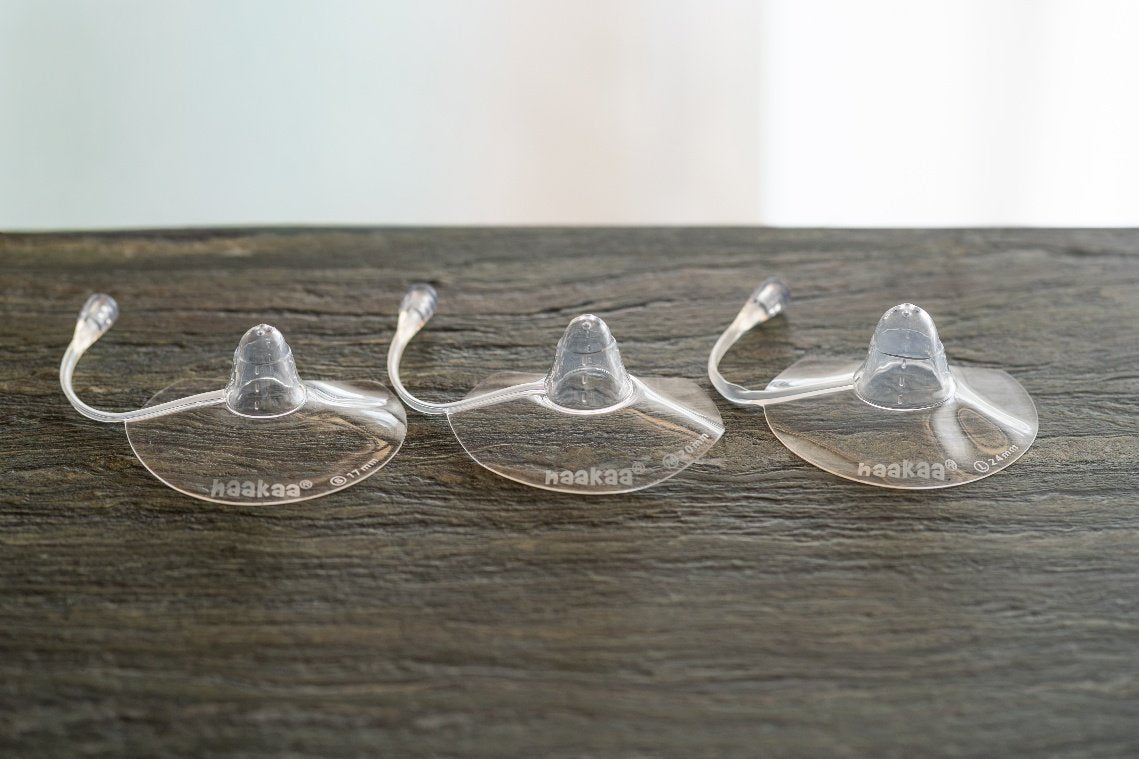
A nipple shield only works well if it fits. The LatchFlow shield comes in three sizes, and you measure across the base of your nipple, not including the areola:
| Shield Size | Shield Opening | Nipple Size |
|---|---|---|
| Small | 17 mm | 13–16 mm |
| Medium | 20 mm | 16–19 mm |
| Large | 24 mm | 19–23 mm |
You want a size where your nipple sits comfortably without touching the sides. Treat this as a general guide only, and if you’re between sizes or unsure, have a lactation consultant check the fit with you.
A few midwife tips for your first feeds
- Let baby latch onto the shield, not just the tip. You still want a wide, deep latch with plenty of breast in your baby’s mouth.
- Go slowly with the flow. Your baby should be sucking and swallowing, not just having milk poured in. If milk is dribbling out of their mouth or they’re gulping and pulling off, slow it down. Do this under the guidance of a lactation consultant only.
- Keep expressing if you can. It gives you your own milk for the next top-up and helps build your supply.
- Clean everything after each use following Haakaa’s instructions. The kit includes a cleaning brush for the tube and connector, plus a storage frame and case that keep the shield in shape between feeds.
- Have a plan for weaning off. For most families, supplementing is a bridge, not forever. As your supply builds and your nipples heal, your lactation consultant can help you reduce the top-ups and, when you’re ready, the shield too.
Needing to top up your baby is not the end of your breastfeeding story. For lots of families, it’s just one chapter. Keeping your baby at the breast while they get that extra milk is one of the best things you can do to protect your supply, and tools like the LatchFlow System make that a whole lot easier to do.
Before you start, please check with your midwife, lactation consultant, GP or paediatrician before using the LatchFlow System, to make sure it’s suitable for you and your baby. Nipple shields and supplementing work best as part of a feeding plan made with someone who has assessed your baby’s feeding, your nipples and your supply.

Free support
- New Zealand: For free 24/7 breastfeeding support, call PlunketLine on 0800 933 922.
- New Zealand: For free 24/7 general health advice, call Healthline on 0800 611 116.
- Australia: Call the Australian Breastfeeding Association Helpline on 1800 686 268 (24/7).
References
- Australian Breastfeeding Association. Using a supply line. Accessed 6 November 2026.
- South Eastern Sydney Local Health District. Supplementary Feeds for Healthy, Term Babies. Accessed 6 November 2026.
- Whitburn, S. (2022). Breastfeeding: Expressing and supplementing. Australian Journal of General Practice, 51(3), 112–115.
- Whānau Āwhina Plunket. PlunketLine. Accessed 6 November 2026.
- Health New Zealand | Te Whatu Ora. Contact us — Call Healthline for free. Accessed 6 November 2026.
- Haakaa. LatchFlow System product information and instructions for use (2026). Internal product reference.
Written by Lauren Brenton
Endorsed Midwife, mum of 5, Founder One Mama Midwife
Important information: This article is provided for general information and education only. It is not personalised medical advice, diagnosis or treatment, and is not a substitute for care from a qualified health professional. If you have concerns about breastfeeding, expressing, milk supply, infant feeding or your baby’s growth, please speak with your midwife, GP, Well Child Tamariki Ora provider (NZ), child health nurse (AU) or an International Board Certified Lactation Consultant (IBCLC). Never disregard professional medical advice or delay seeking it because of something you have read here. Always use Haakaa products in accordance with the instructions and safety warnings supplied with the product.


